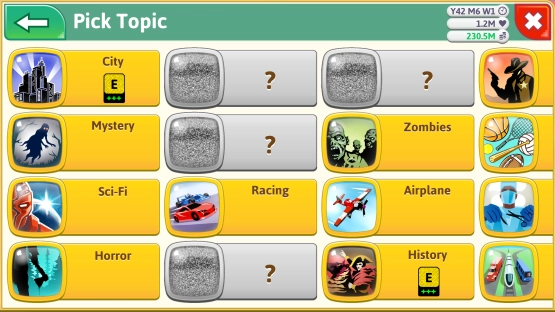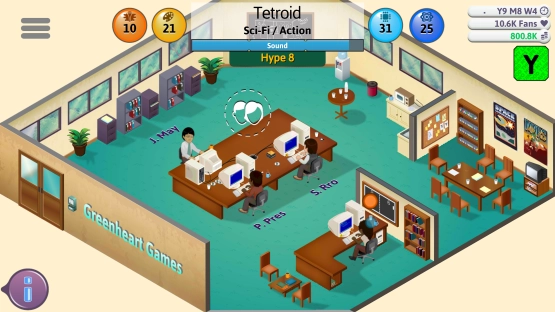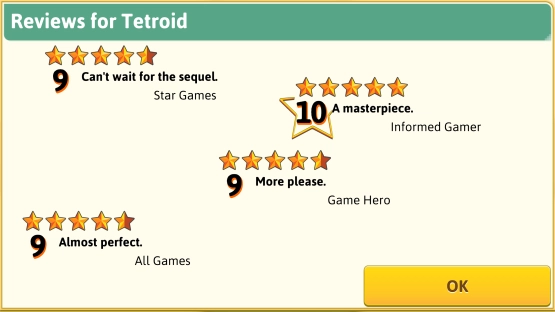
The calendar flips to 1980-something, and the office is just a bedroom with a computer. Game Dev Tycoon drops players into the earliest days of the industry, back when a single developer could code, design, and ship a title without a team. The task is straightforward: pick a genre, choose a topic, build a game, watch the reviews roll in. Some combinations work. Others tank spectacularly. And the only way to learn which is which is by releasing something and reading what the critics say about it.
Sliders, Mismatches, and Sales Reports
Sliders and choices start every project. Should the racing game focus on the engine or the level design? Does the fantasy RPG need more dialogue or better graphics? These aren’t cosmetic tweaks. The game generates a score based on how well the chosen focus matches the genre, and a mismatch between topic and type can wreck an otherwise solid release. Over time, research unlocks new genres, better technology, and custom engines that can be fine-tuned for specific projects. But the core loop stays the same: guess, test, refine, repeat. The reports spell out exactly which features tanked the score and which ones carried it.
When the Garage Gets Too Small
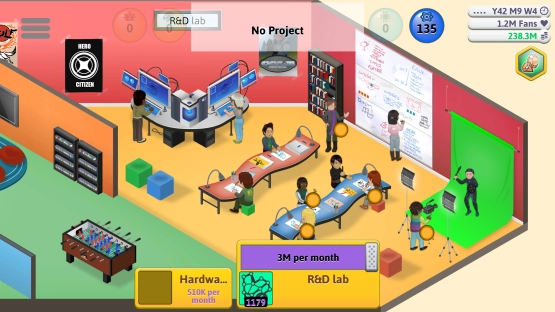
Once the cash flow stabilizes, the game opens up hiring, office upgrades, and multi-person projects. Staff members have stats that affect development speed and quality. Training them costs time and money. Bigger offices mean more desks, more employees, and eventually the ability to work on console hardware or develop proprietary engines. The mobile version of Game Dev Tycoon Mod Apk adds a pirate mode that’s supposedly brutal, plus new topics and a tweaked storyline that accounts for the shift from PC to touchscreen. No ads, no in-app purchases, just the base game with a few extra layers. And getting to secret labs means surviving decades of shifting trends and tech transitions without going bankrupt—a Dreamcast-era flop can still end the whole run.